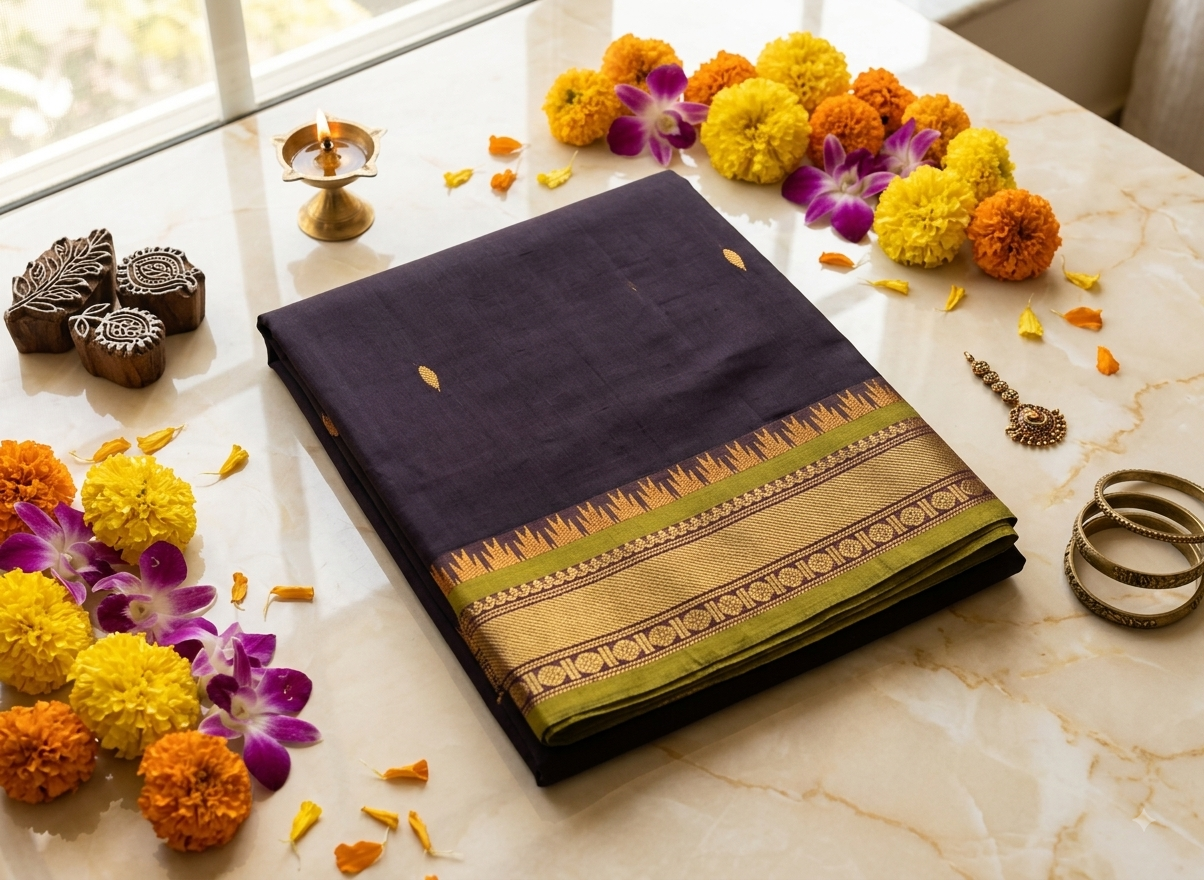
Narmadi Dhoti: The Quiet Tradition Woven from Banana Fiber

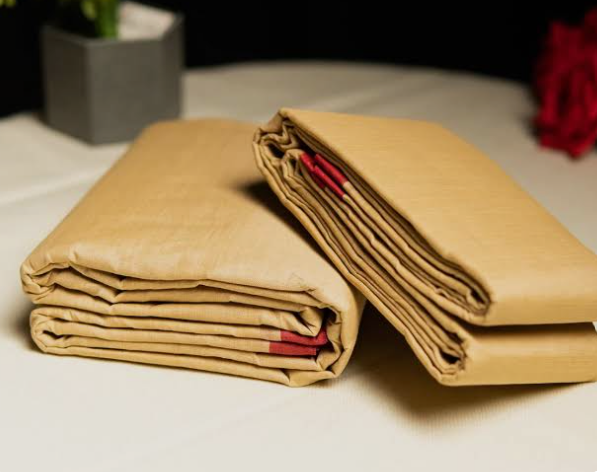
If you’ve heard of Vaazhai Naar Pattu sarees but never came across their male counterpart,
here it is: The Narmadi dhoti. Woven from the natural banana fiber,
Narmadi is simply the traditional dhoti version of this heritage fabric.
Some families cherishes it and many people also choose it as a thoughtful gift for elders. This guide explains what Narmadi truly is, why it holds such significance, and how to wear it correctly.
What Is a Narmadi Dhoti?
Narmadi (also spelled Naarmadi) is a traditional dhoti woven from natural fiber extracted from the banana plant stem.
The same fiber used to weave Vaazhai Naar Pattu sarees for women.
In other words, Narmadi and Vaazhai Naar Pattu come from the same natural fabric tradition; Vaazhai Naar Pattu refers to the saree, while Narmadi refers to the dhoti woven for men.
This natural, plant-based fiber has long been valued in orthodox Tamil households,
where purity and tradition play an important role in daily worship and everyday life.
The Fiber Behind the Fold
Narmadi (also spelled Naarmadi) is a traditional dhoti. Weavers make it from natural fiber extracted from the banana plant stem — the very same fiber they use to weave Vaazhai Naar Pattu sarees for women. In short, Narmadi and Vaazhai Naar Pattu share one fabric tradition. However, Vaazhai Naar Pattu refers to the saree, while Narmadi refers to the dhoti woven for men.
This natural, plant-based fiber has long held a special place in orthodox Tamil households. Indeed, purity and tradition play an important role in daily worship, so families naturally gravitate toward fabrics that reflect these values. As a result, Narmadi has remained a quiet constant across generations, even as fashion trends around it have changed.
Interestingly, few people outside these communities know much about Narmadi at all. Most online searches simply return generic dhoti information, without ever explaining this specific banana-fiber tradition. That gap is exactly why this guide exists — to bring clarity to a fabric that deserves far more recognition than it currently gets.
Why Narmadi Dhoti Is Special?
- Natural, plant-based fiber:
unlike cotton or synthetic blends, Narmadi comes from banana stem fiber, connecting it to a sustainable, eco-conscious weaving tradition. - Rooted in orthodox tradition:
widely preferred by families for daily pooja wear and everyday home use, not just special occasions. - A meaningful gift for elders:
interestingly, most buyers of pure Narmadi dhotis today are younger family members purchasing it as a thoughtful.
It is traditional gift for their parents or grandparents — a way of honoring their daily rituals and comfort. - Lightweight and breathable:
natural fiber allows better air circulation, making it comfortable for extended wear at home or during long pooja sessions.
If you’re looking for a thoughtful, traditional gift for an elder in your family who values daily pooja rituals, Narmadi is often the preferred choice specifically for its natural fiber heritage.
For general everyday or festive wear, cotton or silk dhotis remain popular too.
More Than Just a Fabric — A Family Ritual
For many families, Narmadi is more than clothing. Here’s why it continues to matter:
- Natural, plant-based fiber: unlike cotton or synthetic blends, Narmadi comes from banana stem fiber. As a result, it connects wearers to a sustainable, eco-conscious weaving tradition.
- Rooted in orthodox tradition: orthodox families widely prefer it for daily pooja wear and everyday home use, not just special occasions.
- A meaningful gift for elders: interestingly, most buyers of pure Narmadi dhotis today are younger family members. They purchase it as a thoughtful, traditional gift for their parents or grandparents — a way of honoring daily rituals and comfort.
- Lightweight and breathable: because the fiber is natural, it allows better air circulation. Therefore, it stays comfortable even during long pooja sessions or extended wear at home.
How to Wear a Narmadi Dhoti: Step-by-Step
Step 1: Find the Center
Hold the dhoti with both hands and locate the center point. Place it at your navel, letting the fabric hang evenly on both sides.
Step 2: Wrap Around the Waist
Bring both ends around your waist, crossing at the back and returning to the front.
Step 3: Tie a Secure Knot
Tie the two ends together at the front, similar to tying a lungi, keeping it snug for a comfortable, secure fit.
Step 4: Create the Front Pleats
Gather the loose fabric hanging in front into neat, even pleats and tuck them into the waistband at the center.
Step 5: Take the Length Between the Legs
Pick up the bottom edge and pull it back between your legs, tucking it into the waistband at the back.
Step 6: Adjust the Drape
Smooth the pleats and adjust the length so it falls evenly, ideal for comfortable daily movement, especially for elderly wearers.
Caring for Your Narmadi Dhoti
- Prefer gentle hand wash or dry wash — natural fiber can be more delicate than cotton with harsh washing.
- Since Narmadi is made from natural banana fiber rather than cotton, it needs gentle care:
- Avoid wringing or twisting the fabric forcefully, as this can weaken the fiber over time.
- Dry in shade, avoiding prolonged direct sunlight which can affect the fabric’s natural texture.
- Store folded in a dry place to preserve quality between uses.
Q: Is Narmadi dhoti the same fabric as Vaazhai Naar Pattu sarees?
Yes, both are woven from the same natural banana stem fiber. Vaazhai Naar Pattu refers to the saree for women,
while Narmadi is the equivalent dhoti woven for men.
Q: Who usually wears Narmadi dhoti?
It’s especially popular among orthodox families for daily pooja and home wear.
Many buyers today are adult children purchasing it as a meaningful, traditional gift for elderly parents or grandparents.
Q: How is Narmadi different from cotton or silk dhotis?
Narmadi is made from natural banana fiber, giving it a distinct texture and deep-rooted cultural significance tied to purity and daily ritual wear,
unlike cotton or silk dhotis which are used more broadly for general and festive occasions.
Q: Is Narmadi dhoti a good gift for elderly parents?
Yes — its natural fiber origin, connection to orthodox tradition,
Everyday comfort make it a thoughtful and culturally meaningful gift, especially for parents or grandparents who value daily pooja rituals.
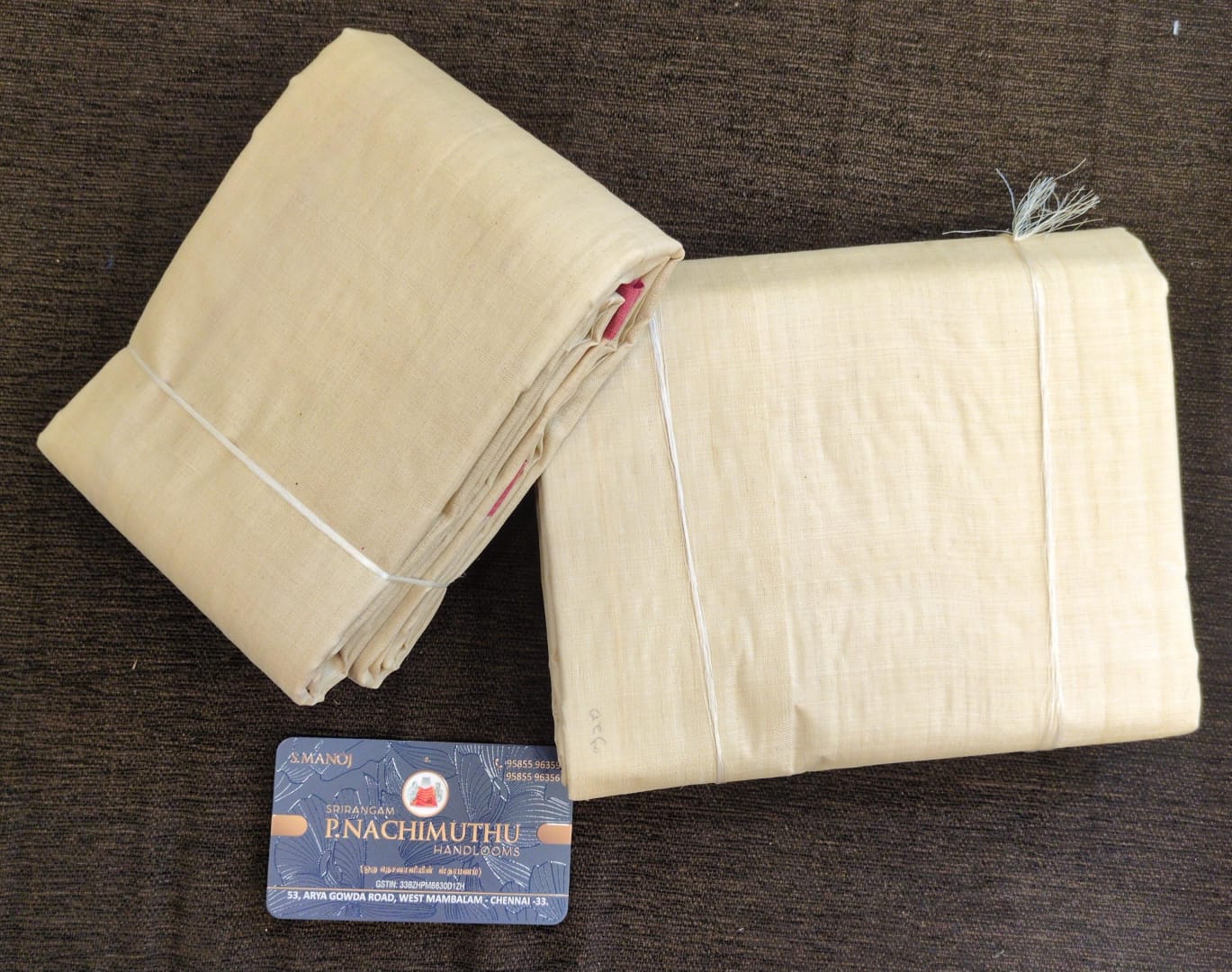
Shop Narmadi Dhoti Online:
Explore our pure Narmadi dhoti collection, woven from natural banana fiber and pooja rituals and daily wear
It is a beautiful, meaningful gift for the elders in your life. Browse our Narmadi Dhoti Collection
- Blog
- Buy Madisar Saree Online: Complete Guide to Fabrics, Styles & Perfect Draping
- Cart
- Cart
- Checkout
- Checkout
- Contact
- Flash Sale
- My account
- New Arrivals
- Our Brand
- Premium Valnaru Pattu Saree – Grand Traditional Look
- Privacy Policy
- Pure Silk 6 Muzham Vasthiram for Men – Traditional Wear
- Shop
- Shop Page
- 10×6 dhoti
- 9 yards
- 9×5 dhoti
- buy dhoti online
- cotton dhoti for men
- easy guide
- handloom dhoti online
- Karaikudi Cotton Madisar
- narmadi
- narmadi dhoti
- pure cotton dhoti 120 counts
- shop dhoti online
- soft cotton dhoti 9×5
- step by step guide
- vaazhainar pattu